
What are fictional languages and why are they needed?
Fictional languages are artificially created language systems used in books, movies, and TV shows. They are used to make the fictional world more realistic, culturally deep, and convincing.
Such languages can have a full-fledged grammar, vocabulary, phonetics, and sometimes their own writing system. All this creates a sense of a real world, where each race or nation has its own linguistic identity.
When characters speak a fictional language, the viewer or reader feels that it is really another civilization, another world, with its own laws and culture. This is what creates the “immersion” effect that is so appreciated by science fiction and fantasy fans.
The Valyrian language: how it was created for Game of Thrones
The Valyrian language was developed for the Game of Thrones series by American linguist David Peterson. It was based on only a few phrases from George Martin’s books, but on the screen it turned into a real language with grammar, syntax, and vocabulary.
In the series, Valyrian is spoken by Daenerys Targaryen and some of the inhabitants of Essos. The language has several dialects, including High Valyrian and Low Valyrian.
Valyrian phrases you heard in the series
- Valar morghulis – all men are mortal
- Valar dohaeris – all must serve
- Dracarys – breathe fire
These phrases have become iconic. They are used in fan art, on merchandise, and even in tattoos. The pronunciation is clear, the sound is firm and commanding.
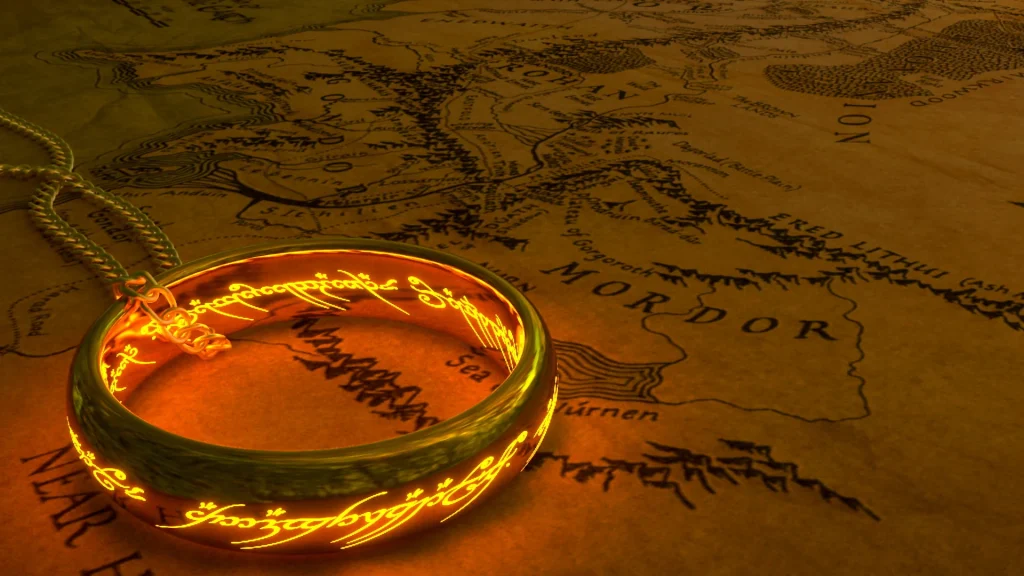
Tolkien’s elven language: history and features
John Ronald R.R. Tolkien was not only a writer, but a professional philologist. His elven languages, Quenya and Sindarin, are among the most developed fictional languages in the world.
They have their own grammar, case system, lexical classes, and poetic formulas. Tolkien based them on Finnish and Welsh, which added melody and harmony.
What words are most often translated into Elvish?
- Mellon – friend
- Elen sila lumenn’omentielvo – the star is shining at the time of our meeting
- Namárië – goodbye
In movies, these phrases often sound untranslated, but they are adapted in subtitles so that viewers understand the meaning.
How translators work with fictional languages
Working with fictional languages is a challenge. The translator must master the grammar, sound system, and context of such languages.
Translators usually use official glossaries or create their own dictionaries by collaborating with linguists or fan communities.
It is important to maintain a balance between accuracy and artistic relevance. In subtitles, some of the lines are left in the original to preserve authenticity.
Top 5 fictional languages in movies and TV series
- Elvish (Tolkien, The Lord of the Rings)
- Valyrian (Game of Thrones)
- Dothraki (Game of Thrones)
- Klingon (Star Trek)
- Parceltang (Harry Potter)
These languages have become a part of global pop culture, with fan dictionaries, translations, and some even official teaching.
More about the languages in the Top 5
Elvish: very melodic, with long vowels. For example, Namárië is pronounced [na-maa-ri-e]. It is used for solemn speeches and poetry.
Valyrian: firm, authoritative. It has a complex conjugation. For example, dracarys has an imperative tone.
Dothraki: guttural, rhythmic. The pronunciation contains “kh”, “sh”, and many short words. For example, athchomari shafkea! means “thank you!”.
Klingon: contains unique consonants, often pronounced with a click of the tongue. The word ‘Qapla’ is pronounced with a guttural ‘k’. It is the official language of the Federation in Star Trek.
Parceltang: hissing and full of hiss. It is used by wizards in the Harry Potter series to communicate with snakes.
Is it possible to learn Elvish or Valyrian?
Yes, and this is no joke. For example, Duolingo offers a course in Valyrian. There are fan sites, video tutorials, PDF grammars, dictionaries, and even proficiency tests.
Universities in the United States teach Elvish as part of a course on Tolkien’s literature. In 2022, Oxford hosted a conference dedicated exclusively to the languages invented by Tolkien.
Comparative table of fictional languages
| Language | Author | Difficulty | Source |
|---|---|---|---|
| Elvish | J. R. R. Tolkien | High | “The Lord of the Rings” |
| Valyrian | D. Peterson | Middle | “Game of Thrones” |
| Dothraki | D. Peterson | Middle | “Game of Thrones” |
| Klingon | Mark Okrand | High | “Star Trek” |
| Parceltang | J. K. Rowling | Low | “Harry Potter” |
Conclusion
Fictional languages are more than just scenery. They are the cultural component of a fictional world.
Translators who work with such languages must be linguists, fans, and artists all at once. They help make the stories deeper and the characters more alive. And that is where the true art of translation lies.